Material handling may not seem critical until something goes wrong. Production delays, unplanned downtime and manual handling can affect output during every shift.
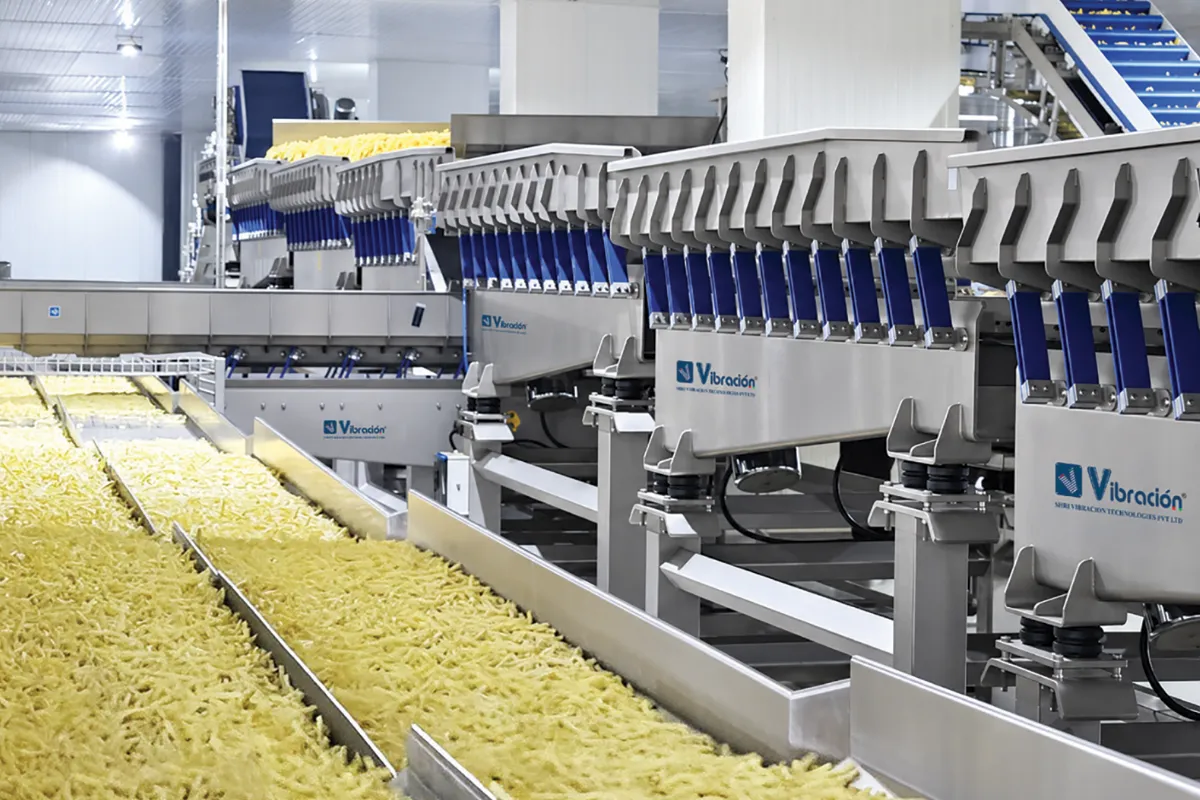
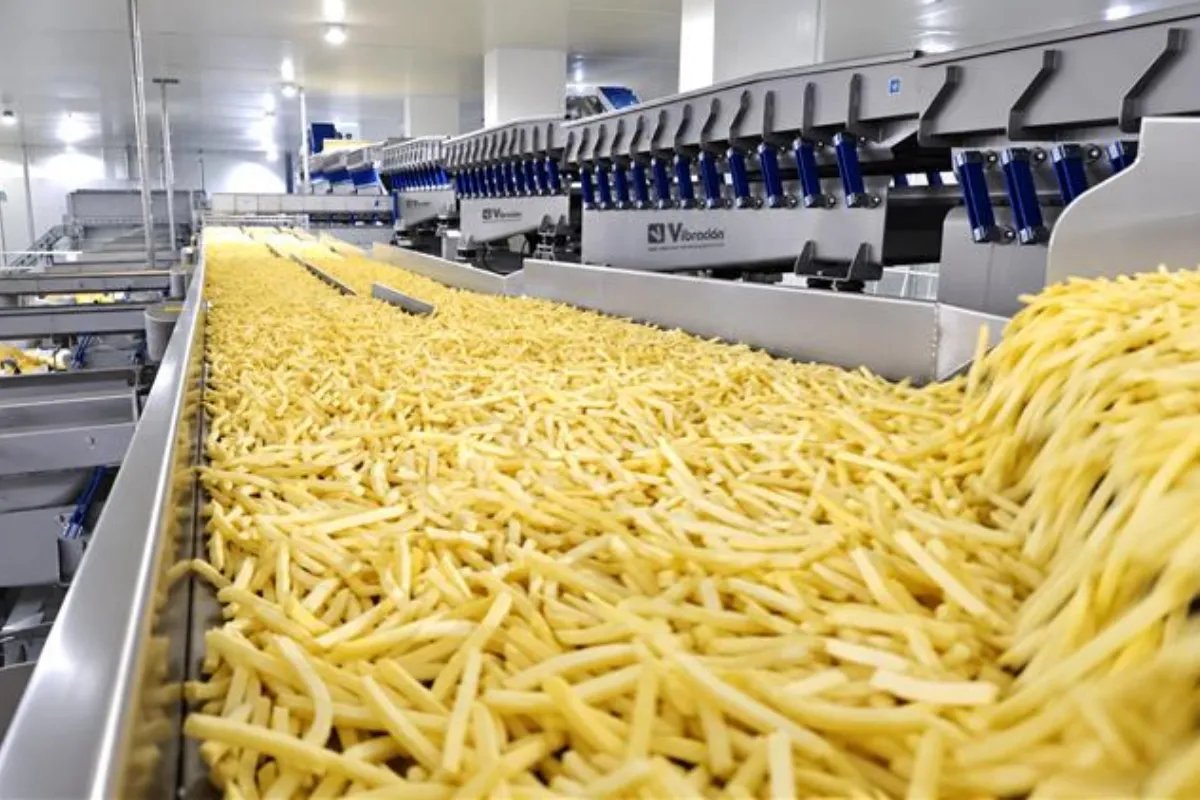
This case study covers a 35 TPH IoT-enabled automated french fries line built by Shri Vibracion Technologies for a leading French fries manufacturer. It is one of the largest French fry distribution systems of its kind and shows how automated material handling can support high-volume production.
Handling 35,000 kg of product every hour requires each part of the system to work together with accuracy and consistency. The project goes beyond simply moving product from one point to another. It connects different stages of the process into one coordinated system, helping the plant maintain a steady product flow and smooth production.
The same approach can be applied across snacks, IQF, pharma, dairy, food processing, grains and packaging industries, where reliable material flow is important for maintaining production efficiency.
In this article, you will find answers to these key questions:
- How does a 35 TPH automated material handling line actually work?
- What control technologies (PLC, HMI, SCADA, VFD) run the system?
- How does IoT connectivity help Shri Vibracion support your plant remotely?
- What are the real, measurable benefits for your production team?
- Is this the right solution for your plant and what comes next?
Keep reading. Each section answers one of these questions directly.
What Is a 35 TPH Fully Automated Line?
A production line moving 35 tonnes per hour, completely on its own.
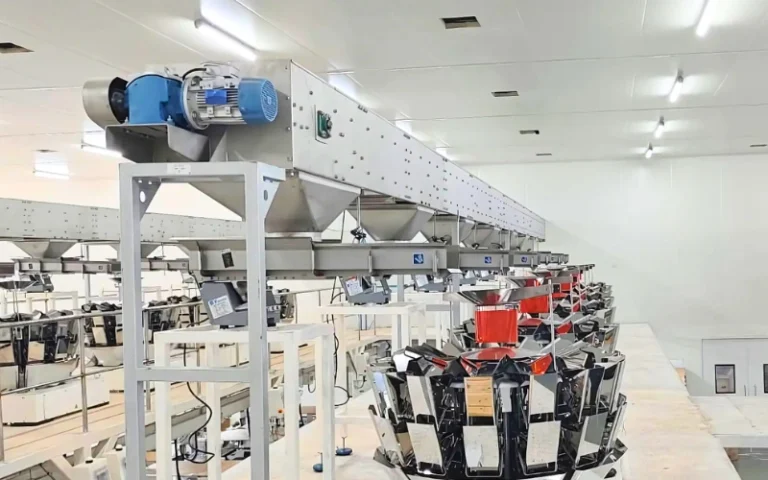
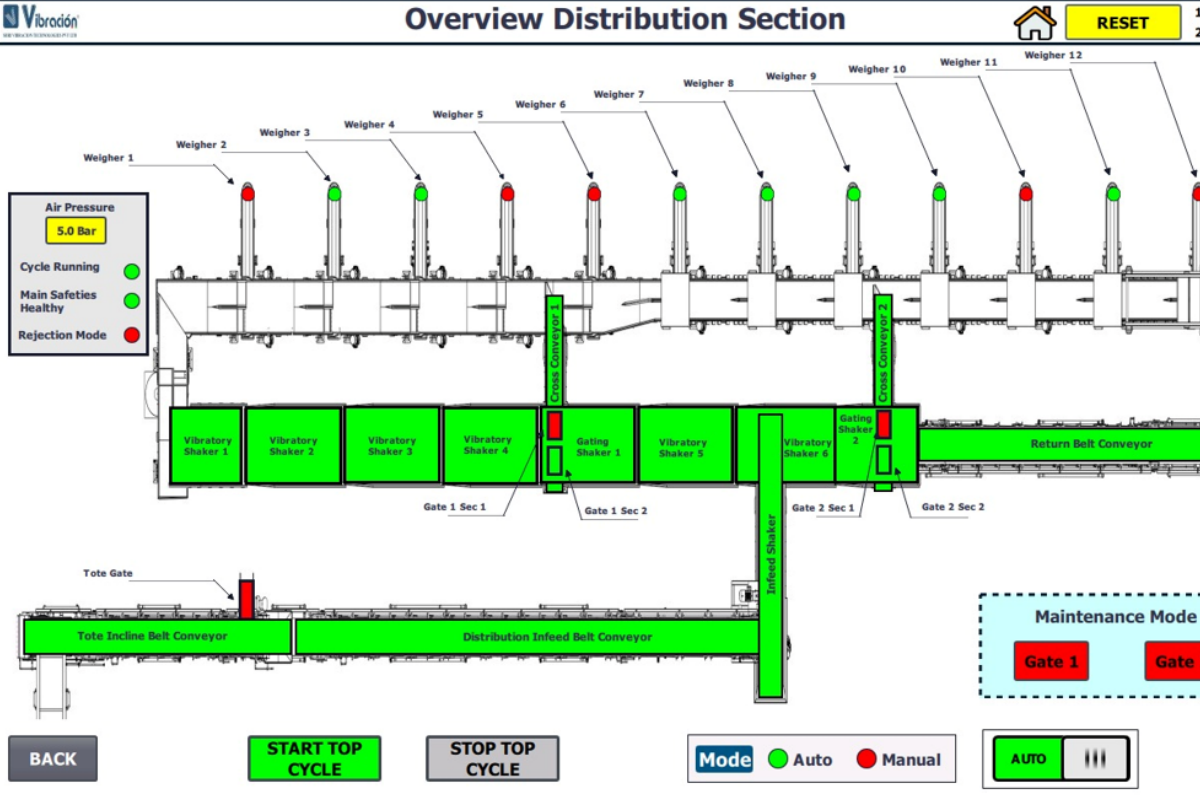
It transports frozen French fries from a freezer at the base of the facility to twelve weighing machines at the top for packaging.
It adjusts automatically to weigher feedback and flags faults instantly. No guesswork. No wasted product.
The Technology Behind It: Four Layers Working as One
We integrated four intelligent control layers into one seamless system:
Optical sorters inspect every piece on the line, removing defects automatically so only quality product reaches the weighers.
1. PLC: The Brain of the Operation
A PLC acts as the central brain, reading sensor data in real time and sending precise instructions to every VFD controlling the motors.
It connects HMI panels and VFDs over an industrial network, forming a closed loop for accurate motor control.
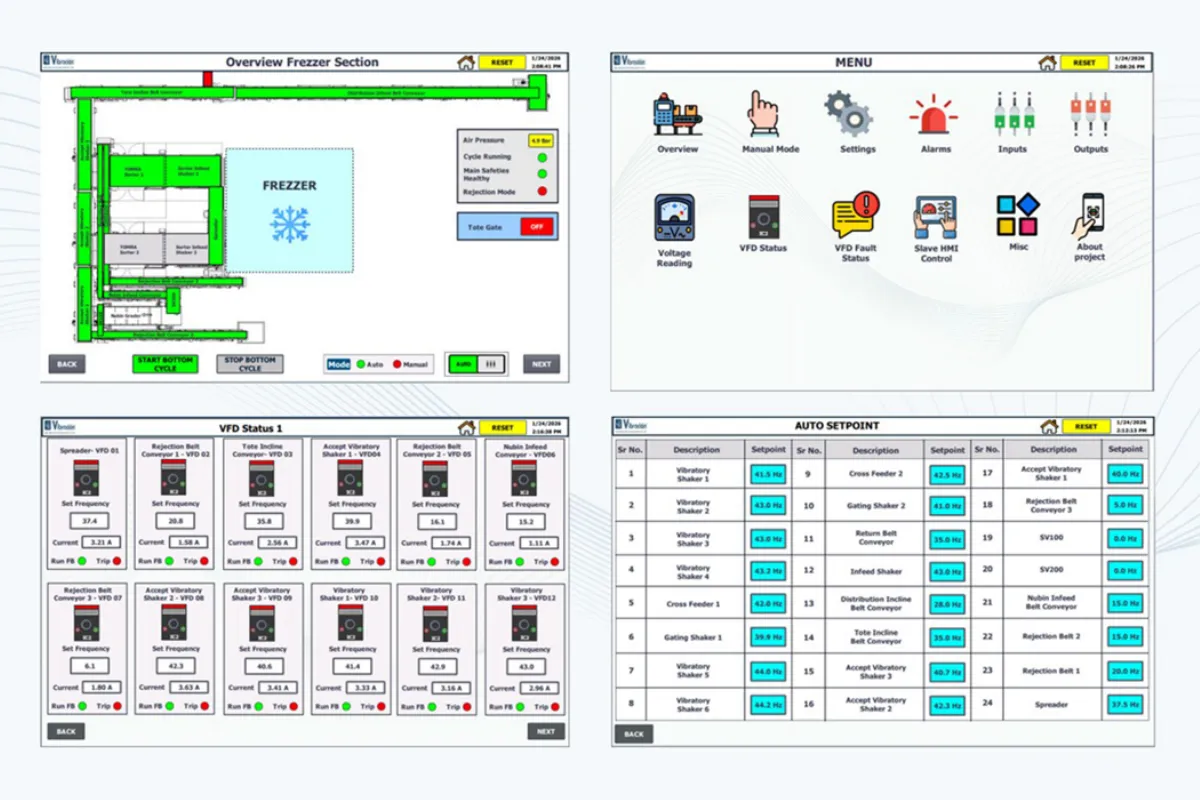
2. HMI: A Screen That Operators Actually Enjoy Using
Most industrial HMI screens are cluttered. Ours is different.
We built a modern dashboard with colour-coded indicators (Green = Running, Red = Fault, Yellow = Warning) and icon-based navigation. Any operator can learn it in minutes.
Everything is in one place. Confident operators catch problems faster.
3. SCADA: Remote Eyes on Your Entire Plant
SCADA connects over the plant network, giving supervisors a real-time view from any device.
- Live motor current and frequency data, graphically trended on screen
- Historical data logging for performance analysis and predictive maintenance planning
- Real-time alarm notifications pushed directly to operator desktops and mobile devices
- Remote start/stop, speed adjustments and fault acknowledgement without walking to the machine
4. VFD Fault Diagnostics: No More Guesswork
When a VFD faults, production stops. Our HMI shows exactly which drive and equipment is affected, guiding the operator to fix it. No specialist needed.
One screen covers all 16+ drives. Troubleshooting time drops and system availability goes up.
The IoT Advantage: Your Plant, Connected and Intelligent
This is where we go beyond what most vendors offer.
An IoT router connects PLC and SCADA to a secure channel so our team sees live data from outside your plant. Issues are caught early and fixed remotely, without a site visit.
How Shri Vibracion’s IoT Works for You
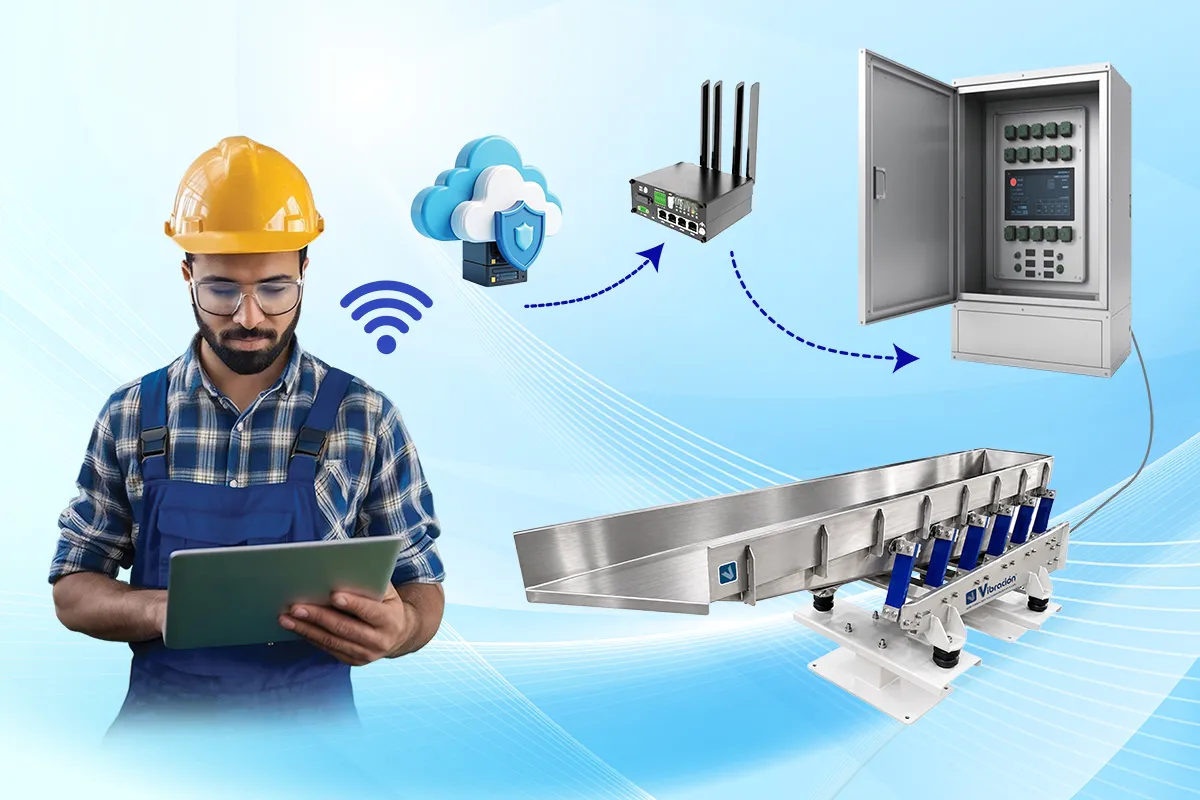
Once the IoT router is live, your line becomes a connected asset visible to your team and ours, in real time.
In practice, this means:
- Live remote monitoring: Our team sees your motor currents, fault codes and alarm logs from outside your plant. Your supervisor sees the same on their phone or desktop.
- Remote fault resolution: On this 35 TPH line, a motor current surge was resolved remotely in minutes, no site visit needed.
- Proactive alerts before breakdown: Alarms push the moment a threshold is crossed, before equipment stops.
- Complete audit trail: Every alarm and action is logged with a timestamp for compliance and root-cause analysis.
- Scales with your business: One dashboard can cover multiple lines and plants as you grow.
This is a continuous support relationship, not just remote access.
| Real Case: During production on this 35 TPH line, our system detected a surge in motor current during peak load. The issue was diagnosed and resolved remotely by adjusting the vibratory feeder stroke and FRP section parameters. The line never went down. |
For plant teams, this means:
- No waiting hours or days for an on-site engineer
- Problems caught early, before they become expensive unplanned breakdowns
- Scalable to multiple lines and multiple plants from a single SCADA dashboard
- Compatible with major industrial SCADA platforms
The same IoT connectivity is the foundation for AI-based predictive maintenance tomorrow.
One Feature Most People Do Not Expect: QR Code Document Access
A QR code on the HMI gives instant access to drawings, manuals and datasheets on any phone.
No binders. No outdated printouts.
Documents are always the latest revision, so maintenance teams never work from wrong information.
The Results: Numbers That Speak for Themselves
After full implementation of the 35 TPH automated line, here is what the system delivered:
| Result | Metric | What It Means for You |
| 4× | Faster Fault Resolution | Remote SCADA diagnostics cut time-to-resolution for VFD and control faults dramatically |
| ↓80% | Manual Interventions | Automated monitoring and real-time alerts eliminated most unplanned manual interventions |
| 100% | Remote Accessibility | Full SCADA access from any networked desktop or mobile. Operators can act from anywhere. |
| Instant | Doc Access | QR-based document access from HMI. No physical manuals, always the latest revision. |
| AI-Ready | Future-Proof Design | Architecture is already built to integrate predictive maintenance and anomaly detection |
Why Choose Shri Vibracion Technologies?
Here is what makes us different.
We think about the operator, not just the engineer
We design every screen for the operator using it daily. Less training, fewer errors.
We do not sell you a product. We solve your specific problem.
This line was built around the client’s exact layout and needs: 24 drive setpoints, custom distribution logic for twelve weighers and an operator-matched HMI. We bring the same thinking to every project.
We stay connected after handover
Handover is not the end. We stay connected, watching trends and resolving issues remotely. AI predictive maintenance is on the roadmap, using data already being collected.
Is This the Right Solution for Your Production Line?
This is the right fit if:
- You run a food, snacks, IQF, pharma, dairy or packaging line and lose time to manual interventions
- Your maintenance team struggles to diagnose faults quickly, especially on off-hours shifts
- You want real-time visibility of your entire plant from a single screen
- You are tired of calling in specialists every time a drive or sensor goes down
- You want a scalable system that can grow with your production capacity
- You process high volumes and need systems designed for demanding, continuous-run environments
What’s Next: The Future Is AI-Powered
The 35 TPH line is already highly automated. But the architecture is built for what comes next:
- AI anomaly detection: machine learning models that predict faults before they happen
- Expanded sensor networks: vibration, temperature and flow sensors for deeper machine health insight
- Advanced data dashboards: long-term performance trending to identify patterns and optimise throughput
Companies that invest in smart automation today will have the edge tomorrow. Lines that self-diagnose and communicate remotely are not just efficient. They are resilient.
Final Thoughts
This line is more than a project. It is a global benchmark in what automated material handling can look like.
What this project shows:
- Smart material handling is already running at 35 TPH in a real plant.
- IoT connectivity turns your equipment from a machine into a managed, visible, remotely-supported asset.
- The same approach works at any scale.
- Shri Vibracion stays connected after commissioning.
If this sounds like what your plant needs, reach out.
Whether starting from scratch or upgrading a line, we bring the expertise and long-term support to make it work. We do not just move material. We engineer intelligent systems.
Since 2017, we have built equipment that is simple, hygienic and cost-effective. This project is our best example of what that commitment delivers.